 Delivery all over Switzerland
Els Jelipins
Glòria
Els Jelipins is a deeply personal project in the hills of Penedès, where Glòria Garriga crafts some of the most singular wines of the region. Working on a very small scale and outside conventions, she produces expressive, low-intervention wines rooted in old vines, intuition and a strong connection to nature...

Els Jelipins at a glance
| Country | Spain |
| Region | Penedès |
| Village | Font-Rubí |
| Grape varieties | Sumoll |
| First vintage | 2003 |
| Vineyard area | Various small plots |
| Practices | Organic farming, minimal intervention |
| Our favourites | Vi de Taula Negre |
Following intuition
Els Jelipins was founded in 2001 by Glòria Garriga, a former agricultural engineer who chose to leave behind conventional viticulture after becoming disillusioned with increasingly intensive farming practices. Together with her daughter Berta, she set out to build a small, family-run project in the hills of Font-Rubí, in the Penedès Superior, with the simple ambition of living and working in closer harmony with nature.
Rather than establishing a traditional estate from the outset, Glòria spent years searching for and selecting small hillside parcels across the region, focusing on sites with distinctive soils and old vines. These vineyards, often planted on complex mixtures of clay, limestone, slate and quartz, are worked organically, with careful manual farming and a strong emphasis on observation and adaptability rather than rigid methodology.
From the beginning, Els Jelipins has remained intentionally small in scale. The first wines were produced in 2003 in modest conditions, and today annual production rarely exceeds a few thousand bottles, allowing the entire process to remain fully hands-on and controlled by the family.
At the heart of the project is the revival of Sumoll, a native Catalan grape that had nearly disappeared by the late 20th century. Naturally low-yielding and well adapted to dry conditions, Sumoll offers freshness, structure and a distinct mineral profile, and has become the backbone of Els Jelipins’ wines.
Winemaking follows a similarly uncompromising philosophy. Fermentations are spontaneous, carried out slowly and without temperature control, and élevage takes place in neutral vessels such as old barrels, amphorae or concrete. The wines are bottled without fining or filtration, often with little or no added sulfur, resulting in wines that are textured, vibrant and sometimes deliberately unconventional in expression.
More than a conventional winery, Els Jelipins can be understood as a long-term, evolving project shaped by intuition and lived experience. Each cuvée reflects a particular moment, vineyard or decision, rather than a fixed formula. In this sense, Glòria Garriga’s work stands apart within Penedès: less concerned with stylistic consistency, and more focused on capturing the vitality, fragility and complexity of both place and process.
Els Jelipins - the complete range
 Els Jelipins
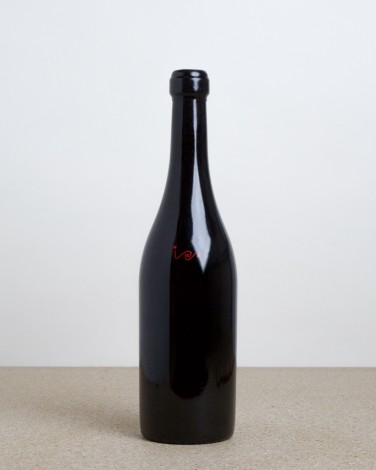
Vi de Taula Negre "Els Jelipins", 2022
CHF 96.00
A comeback grape in the hills of Font-Rubí
Once widely planted across Catalonia, Sumoll gradually fell out of favor during the 20th century, often considered too rustic, too unpredictable, and difficult to manage in both vineyard and cellar. As international varieties and more productive grapes took over, it nearly disappeared, surviving only in scattered old vines tended by a handful of growers.
In the higher hills of Font-Rubí, however, Sumoll has found a new context. Here, cooler elevations and limestone-rich soils help bring balance to the variety, preserving its natural acidity while refining its structure. Under these conditions, Sumoll reveals a different profile: lighter, more vibrant, with fresh red fruit, herbal notes and a marked sense of tension.
Through projects like Els Jelipins, the grape is being reinterpreted rather than reinvented. By working with old vineyards and a low-intervention approach, these wines highlight Sumoll’s ability to express both place and climate, offering a more precise and contemporary reading of a once-overlooked Catalan variety.
The village of Font-Rubí, Spain